RECENT PUBLICATIONS
Recent Publications
Life Satisfaction as a Key to Healthy Aging at Work
Healthy aging is about more than preventing disease - it also means supporting mental well-being, resilience, and quality of life throughout the working years. This review explores how life satisfaction can serve as a practical and measurable target for workplace health promotion within the Semmelweis–EUniWell framework. The authors highlight that employees who experience greater well-being are more likely to remain healthy, productive, and engaged as they age. Instead of focusing only on treating illness, the framework promotes preventive strategies that strengthen psychological and social health across the entire workforce.
The publication also emphasizes the importance of interdisciplinary collaboration in developing evidence-based approaches to healthy aging. Researchers from the Translational Research Institute contributed to this international effort, supporting the translation of scientific knowledge into practical solutions that can improve employee health and well-being. By connecting research, prevention, and real-world implementation, the study demonstrates how universities and healthcare institutions can play a leading role in creating healthier workplaces for an aging population.
Journal Reference
Zábó V, Lehoczki A, Buda A, Varga P, Fekete M, Fazekas-Pongor V, et al. Promoting healthy aging in occupational settings: satisfaction with life as a strategic target in the Semmelweis-EUniWell framework. GeroScience. 2026. doi:10.1007/s11357-026-02339-z.
Transcranial Magnetic Stimulation: Advancing Brain Health from Healthy Aging to Alzheimer’s Disease
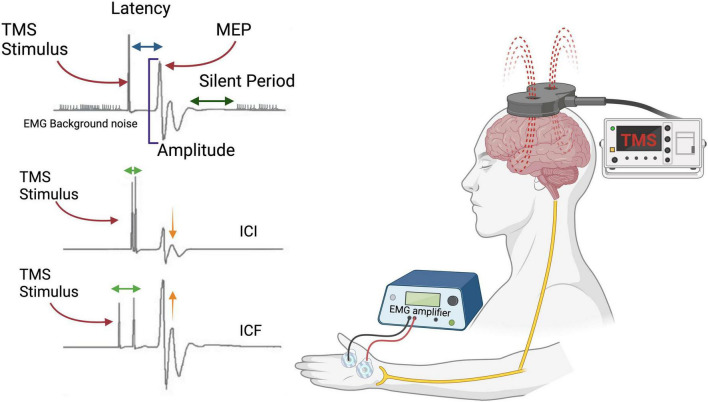
As the global population ages, preserving cognitive function has become a major healthcare priority. This review examines the growing role of transcranial magnetic stimulation (TMS), a non-invasive technique that uses magnetic pulses to influence brain activity. The authors summarize current evidence showing that repetitive TMS (rTMS) may improve memory, attention, and executive function by promoting neuroplasticity and supporting communication between brain networks. While further clinical studies are needed, the findings highlight the technology's potential to slow cognitive decline and contribute to healthier brain aging.
The review also outlines the challenges that must be addressed before TMS can become part of routine clinical care, including optimizing stimulation protocols and identifying the patients most likely to benefit. Researchers from the Institute for Translational Research contributed to this international collaboration, helping bridge fundamental neuroscience with clinical applications. By translating emerging scientific discoveries into evidence-based therapeutic strategies, the Institute supports the development of innovative approaches for preventing and treating age-related cognitive disorders, including Alzheimer's disease.
Journal Reference
Saleh Velez F, Cedeno-Bruzual M, Zuniga-Gutierrez M, Mercado Pena D, Ballard CL, Kong JS, et al. Transcranial magnetic stimulation from healthy brain aging to Alzheimer's disease: a review on mechanisms, therapeutic potential, and future clinical directions. Frontiers in Aging Neuroscience. 2026;18:1778992. doi:10.3389/fnagi.2026.1778992.
How the Aging Brain May Accelerate Muscle Loss
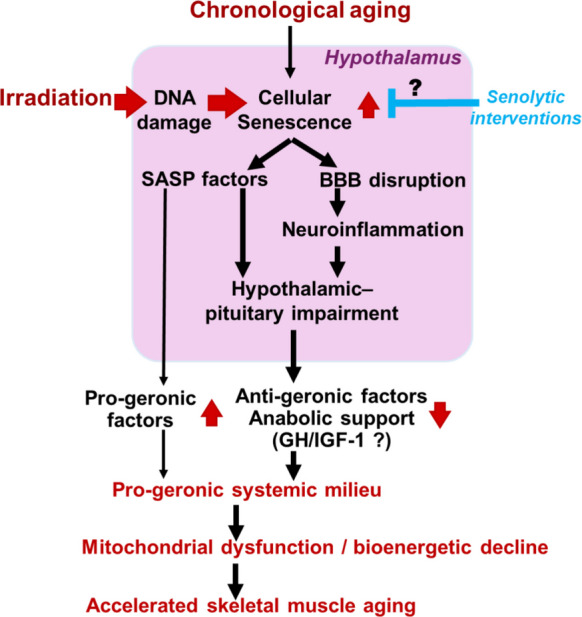
Healthy aging depends not only on strong muscles but also on a healthy brain. This study reveals that biological aging processes in the brain may directly contribute to age-related muscle loss, known as sarcopenia. Using an experimental model, the researchers showed that cellular senescence in the brain triggered molecular changes in skeletal muscle that closely resembled those seen during natural aging. The findings suggest that the brain plays a much more active role in regulating muscle health than previously recognized, opening new perspectives on why frailty develops with age.
The study also highlights the importance of targeting aging as a whole-body process rather than treating individual organs in isolation. Researchers from the Institute for Translational Research contributed to this international collaboration, helping uncover the biological links between brain aging and muscle decline. By advancing our understanding of the brain–muscle aging axis, the research may support the development of innovative strategies to prevent frailty, preserve mobility, and promote healthier aging in older adults.
Journal Reference
Ekambaram S, Patai R, Gulej R, Kiss T, Chandragiri SS, Nagy D, et al. Brain senescence drives sarcopenia-like transcriptomic remodeling in skeletal muscle. GeroScience. 2026. doi:10.1007/s11357-026-02205-y.
Walking Patterns May Reveal the Earliest Signs of Brain Aging
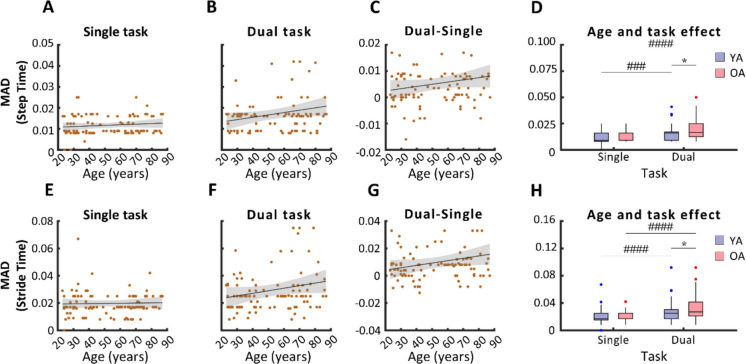
The way we walk can provide valuable insights into how our brain and body age. This study investigated how aging and increased mental effort affect walking patterns by analyzing not only the speed and rhythm of gait but also the natural variability and complexity of each step. The researchers found that older adults show greater changes in walking stability, especially when performing a cognitive task while walking. These subtle alterations may serve as early indicators of declining brain function, long before more obvious symptoms appear, making gait analysis a promising tool for the early detection of age-related cognitive decline.
Researchers from the Institute for Translational Research contributed to the development of the Semmelweis Study gait assessment framework, which combines digital gait analysis with vascular, metabolic, and cognitive health assessments. This multidisciplinary approach aims to identify early biomarkers of unhealthy aging and support preventive interventions before significant functional decline occurs. By translating advanced research into practical clinical tools, the Institute is helping pave the way for more personalized strategies to promote healthy longevity and preserve independence in older adults.
Journal Reference
Mukli P, Murányi M, Lipecz Á, Szarvas Z, Csípő T, Fekete M, et al. Age- and cognitive load-related variability and entropy of gait: integrating coefficient of variation, median absolute deviation, and permutation entropy of spatiotemporal parameters into the Semmelweis Study gait assessment framework. GeroScience. 2026. doi:10.1007/s11357-026-02256-1.
Can Plasma-Based Therapies Help Slow the Aging Process?
Scientists have long been fascinated by the possibility that factors circulating in the blood could influence how our bodies age. This review examines the scientific evidence behind plasma-based rejuvenation strategies, including plasma transfer and therapeutic plasma exchange, which have shown promising results in experimental models. While these approaches have improved brain, vascular, and immune function in preclinical studies, the authors emphasize that there is currently insufficient evidence to support their widespread use as anti-aging therapies in humans. Instead, they argue that understanding the specific biological mechanisms behind these effects is essential before such treatments can become part of routine clinical practice.
Researchers from the Institute for Translational Research contributed to this international review, highlighting the importance of translating discoveries in aging biology into safe, evidence-based medical interventions. Rather than promoting unproven rejuvenation therapies, the authors advocate for precision medicine approaches that identify the molecular drivers of aging and develop targeted treatments. This work provides a realistic roadmap for future research while reinforcing the need for rigorous clinical validation before plasma-based interventions can be safely introduced into healthcare.
Journal Reference
Ungvari Z, Tarantini S, Csipo T, Yabluchanskiy A, Kiss T, Gulej R, et al. Plasma-based strategies for systemic rejuvenation: critical perspectives on clinical translation. GeroScience. 2026. doi:10.1007/s11357-026-02136-8.
How “Young Blood” May Help Protect the Aging Brain
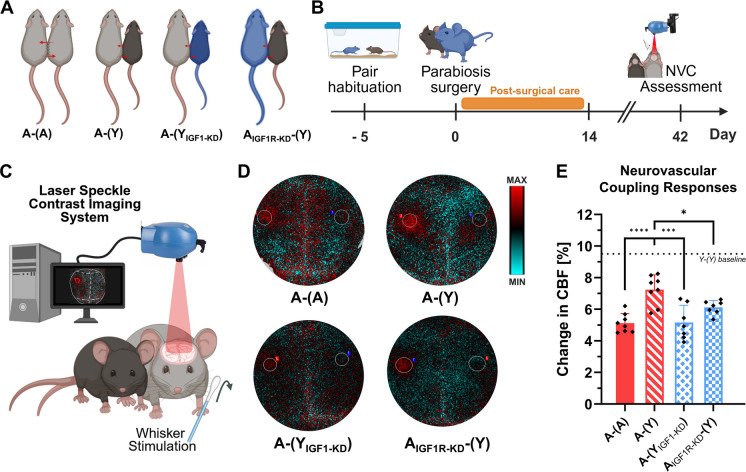
As we age, the brain gradually becomes less efficient at matching blood flow to the activity of nerve cells - a process known as neurovascular coupling. This decline contributes to memory problems and increases the risk of cognitive impairment. In this study, researchers investigated why exposure to a young circulatory system can restore healthy brain blood flow in older animals. They found that a key role is played by IGF-1 (insulin-like growth factor-1) and its receptor in the cells lining blood vessels. Although these molecules do not fully explain the rejuvenating effects of young blood, they appear to be essential components of the biological pathways that help maintain healthy brain function during aging.
Researchers from the Institute for Translational Research contributed to this international collaboration, advancing our understanding of the molecular mechanisms that underlie healthy brain aging. By identifying how IGF-1 signaling supports vascular function in the aging brain, the study provides valuable insights for the development of future therapies aimed at preserving cognitive health and preventing age-related neurovascular disorders. This work represents another important step toward translating discoveries in aging biology into innovative strategies for healthy longevity.
Journal Reference
Gulej R, Kiss T, Tarantini S, Csipo T, Chandragiri SS, Yabluchanskiy A, et al. Young blood-induced rejuvenation of neurovascular coupling involves endothelial IGF-1/IGF-1R signaling: evidence from heterochronic parabiosis using endothelial IGF-1R deficient and systemic IGF-1 knockdown mice. GeroScience. 2026. doi:10.1007/s11357-026-02118-w.